Engine-derived ROI benchmarks for Bozeman-area short-term rentals, single-family rentals, and small commercial properties. Numbers come from running real fixtures through the Cost Seg Smart engine, same engine that produces your actual study. Studies from $495.
Operated by Cost Seg Smart. Studies are IRS-aligned with engineer review included. 5 fixture benchmarks computed May 2026.
Numbers above are engine-estimated outputs from running 5 representative fixtures, not promises about what your specific property will produce. Results vary based on actual property condition, year built, renovation history, county assessor data quality, and rental treatment (STR vs LTR). Full per-fixture table, neighborhood breakdown, and downloadable CSV/PDF on the Bozeman cost seg benchmarks page.
Bozeman has shifted substantially over the past five years from a quieter Montana university-and-ski-feeder market into one of the most heated growth markets in the Rocky Mountain West. Post-2020 migration into Bozeman has driven price appreciation well above historical norms, and the current investor profile is materially different from the pre-pandemic profile, current buyers are typically higher-income, often out-of-state, with longer hold horizons than the previous cycle's MSU-rental-oriented investor base.
The cost-seg case for Bozeman rests on two demand drivers. Big Sky ski-resort feeder traffic supports STR demand in the Gallatin Gateway and Four Corners corridors south of Bozeman proper, where ski-vacation traffic combines with summer Yellowstone-gateway traffic to produce relatively year-round occupancy. Montana State University student-and-staff rental demand supports LTR cash flow in MSU-adjacent neighborhoods, with consistent year-over-year occupancy and lower vacancy risk than typical vacation-rental markets. The two demand profiles produce different optimal property types, STR-oriented SFR in the Big Sky corridor; LTR-oriented SFR in MSU-adjacent areas.
Montana's partial decoupling from federal §168(k) is the state-tax wrinkle, but the absolute dollar impact is modest given MT's 5.9% top marginal rate. For a Bozeman owner taking $80,000 of accelerated reclassification, federal Year-1 savings at 37% is $29,600 and MT total savings is approximately $4,720, with the MT acceleration partially deferred over the regular MACRS schedule rather than concentrated in Year 1. The federal benefit captures cleanly; the MT-side timing mismatch is small enough to model with little operational friction.
Decoupling: Montana has periodically modified bonus depreciation conformity. Verify current-year treatment with your CPA.
Verify with your CPA. State tax conformity rules for federal §168(k) bonus depreciation are adjusted frequently, multiple states have modified their treatment two or more times in the past decade. The general framing on this page reflects our understanding as of May 2026, but you should always verify current-year treatment with a qualified CPA or tax attorney before relying on specific dollar projections for your situation.
These aren't rough estimates. Each fixture was run through the same engine that produces your actual study, RSMeans 2024 base costs, BLS PPI time index, county assessor land allocation, IRS Pub. 946 / Rev. Proc. 87-56 MACRS classification, 100% bonus depreciation per OBBBA.
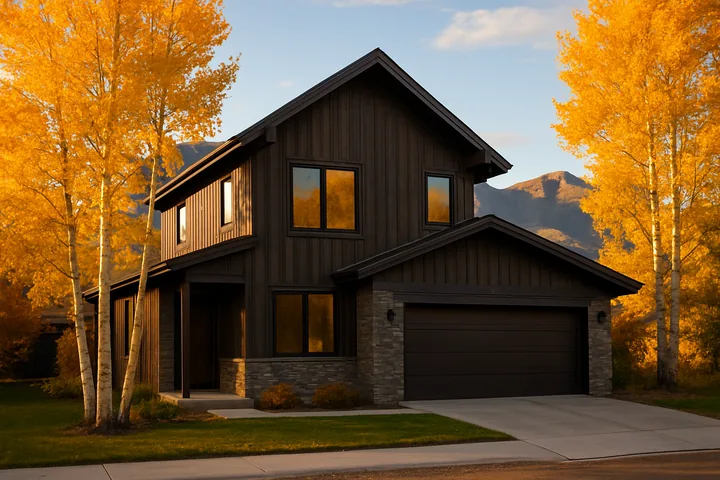
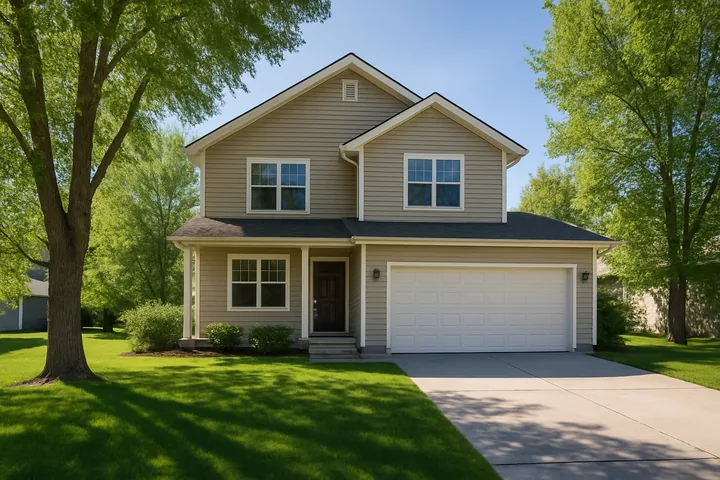
| Purchase price | $985,000 |
| Depreciable basis | $816,959 |
| Land allocation | 17.1% |
| 5-year reclassified | $151,451 |
| 15-year reclassified | $52,682 |
| Total reclass | 25.4% |
| Purchase price | $725,000 |
| Depreciable basis | $599,140 |
| Land allocation | 17.4% |
| 5-year reclassified | $61,192 |
| 15-year reclassified | $39,940 |
| Total reclass | 16.9% |
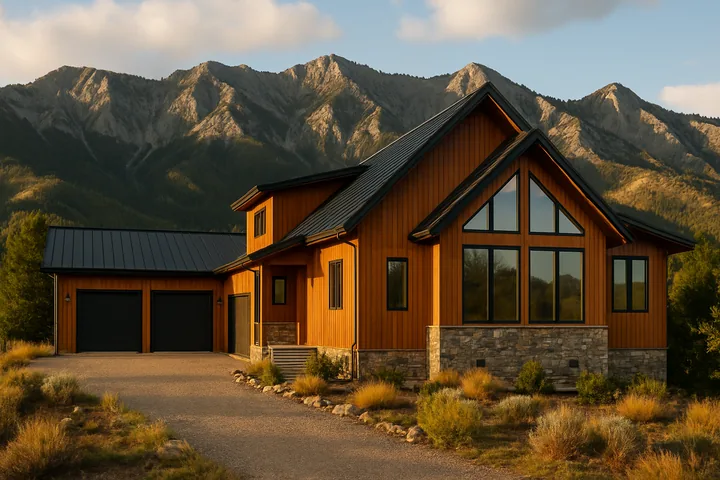
| Purchase price | $925,000 |
| Depreciable basis | $769,045 |
| Land allocation | 16.9% |
| 5-year reclassified | $151,301 |
| 15-year reclassified | $46,709 |
| Total reclass | 26.4% |
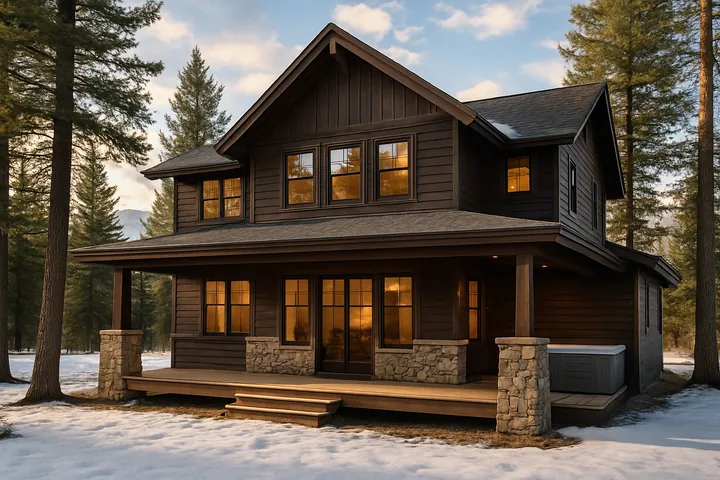
| Purchase price | $825,000 |
| Depreciable basis | $678,398 |
| Land allocation | 17.8% |
| 5-year reclassified | $130,794 |
| 15-year reclassified | $43,285 |
| Total reclass | 26.2% |
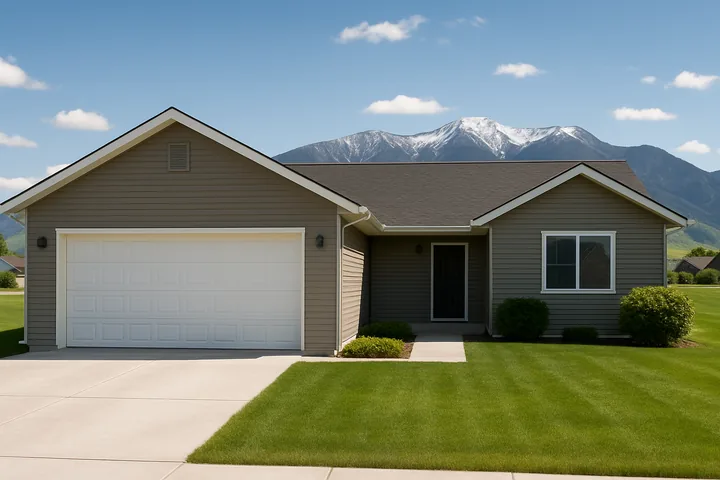
| Purchase price | $525,000 |
| Depreciable basis | $426,615 |
| Land allocation | 18.7% |
| 5-year reclassified | $44,000 |
| 15-year reclassified | $28,812 |
| Total reclass | 17.1% |
Cost-seg ROI varies more by neighborhood than by city. Bozeman's 5 sub-markets each have their own land-allocation pattern and property archetype:
| Neighborhood | Typical value | Typical land allocation | Profile note |
|---|---|---|---|
| Downtown Bozeman | $985,000 | ~30% | Walkable downtown core with historic and post-2010 mixed stock. Higher land allocation due to walkability premium. Mix of SFR and townhome. |
| MSU-Adjacent Residential | $725,000 | ~26% | Residential market within walking distance of Montana State University. Strong student-rental LTR demand. Mid-tier land allocation. |
| Bridger Foothills (north) | $925,000 | ~24% | Newer-construction SFR in the Bridger Mountain foothills north of Bozeman. Lower land allocation. Mix of primary residence and vacation STR. |
| Gallatin Gateway / Four Corners (Big Sky corridor) | $825,000 | ~22% | Gallatin Gateway and Four Corners corridors between Bozeman and Big Sky Ski Resort. Strong ski-feeder STR demand. Lower land allocation. |
| Belgrade / suburban Gallatin County | $525,000 | ~18% | Suburban Belgrade and West Yellowstone-feeder corridor. Lower entry pricing, lowest land allocation. Mix of LTR rental and emerging STR. |
Methodology note: "Typical land allocation" reflects baseline patterns for the sub-market. For ultra-premium or resort-tier inventory where reconstruction cost exceeds 2.0× the implied depreciable basis after subtracting baseline land, the engine applies a premium land floor (~50%) to keep the study within audit-defensible territory. This means individual fixture engine output may exceed the neighborhood typical, especially for resort-tier ski-in/ski-out, beachfront, or view-premium product where land scarcity dominates value. See the /data/ page for per-fixture land-source attribution. Results vary substantially by specific property condition, renovation history, and assessor records.
City of Bozeman operates a Short-Term Rental Ordinance with permit requirements and density caps in certain residential zones. The City has periodically reviewed and tightened STR rules as the market has grown. Unincorporated Gallatin County (Gallatin Gateway, Four Corners, parts of the Big Sky corridor) operates lighter STR regulation. City of Belgrade has its own ordinance. STR-intent buyers should verify the property's jurisdiction. For STR in the Big Sky ski-feeder corridor specifically (Big Sky proper is in Madison County, not Gallatin), additional jurisdictional verification is warranted. Material participation under §469 is achievable for self-managing operators. The Bozeman professional-management ecosystem has grown but remains smaller than mature ski markets like Park City or Breckenridge, many cabin owners self-coordinate.
For the full IRS-rule reference layer (§168(k), §469 material participation, state conformity), see irsdepreciationrules.com, our open reference site.
Modestly. Montana requires addbacks for federal §168(k) bonus depreciation on the MT return, with the addback amount recovered over the regular MACRS schedule for state purposes. For 2025+ acquisitions under OBBBA's 100% federal bonus, the MT-side timing impact is modest at MT's 5.9% top rate. For a Bozeman owner taking $80,000 of accelerated reclassification, federal Year-1 savings at 37% is $29,600 and MT total savings is approximately $4,720, but the MT acceleration is partially deferred to subsequent years rather than fully captured in Year 1. Total MT savings equals what it would be under full conformity; only the timing is mismatched. Verify current MT treatment with your CPA, Montana has adjusted conformity multiple times.
Both work, but for different investor profiles. STR-intent investors benefit from properties in the Gallatin Gateway and Four Corners corridors south of Bozeman, where ski-vacation traffic to Big Sky combined with summer Yellowstone-gateway traffic produces year-round occupancy. LTR-intent investors benefit from MSU-adjacent properties where student-and-staff rental demand produces consistent occupancy with lower vacancy risk than vacation rental. The cost-seg engine treats both differently, STR property gets the FF&E uplift; LTR property doesn't, so engine reclass ratios for STR properties run 22–26% while LTR properties run 16–20%. For a single-property buyer, choose the operating strategy that matches your buy-box; for portfolio investors, consider diversifying across both.
Three ways. (1) Higher absolute basis: Bozeman median property values have risen substantially since 2020, so the absolute dollar deductions on cost-seg studies are larger than they would have been on pre-pandemic-priced properties. (2) Higher land allocation: as prices have risen faster than construction costs, land allocations have shifted upward, engine outputs for current Bozeman fixtures run 22–30% land vs probably 16–24% on pre-pandemic-priced equivalents. This compresses reclassification ratio percentages slightly. (3) Hold-period assumptions: post-2020 buyers face higher recapture risk on sale if values normalize, model conservative 7+ year hold periods rather than 5-year cycles to manage recapture exposure.
Yes, Big Sky is approximately 50 miles south of Bozeman via US-191, and Big Sky's accommodation supply doesn't fully absorb peak ski-season and peak summer-tourism demand. Gallatin Gateway, Four Corners, and the southern Bozeman corridor properties capture meaningful overflow demand from Big Sky resort traffic. Big Sky proper is in Madison County (not Gallatin County) with its own STR regime, so the Bozeman-area corridor properties operate under Gallatin County rules. ADR profiles for ski-feeder Bozeman properties run lower than Big Sky proper but operate with less regulatory friction and lower entry pricing, a different optimization than buying directly in Big Sky.
Because most Bozeman cost-seg-relevant property is post-2000 construction. The downtown Bozeman residential cohort has some pre-war structures, but the majority of investor activity centers on post-2010 new construction in the Bridger Foothills, Gallatin Gateway, Four Corners, and Belgrade corridors. New construction has less post-purchase renovation history layered onto it, the engine treats the original construction allocation as the dominant pool rather than the renovation pool. This contrasts with markets like downtown Savannah, Brooklyn brownstones, or Old Town Park City where 100+ year structural shells require renovation-pool dependency. For Bozeman buyers acquiring new-construction product, the engine produces clean reclass ratios from the original construction without renovation-pool reliance.
More general cost-seg questions answered at costsegsmart.com/faq/.
Cost Seg Smart studies are IRS-aligned, engineering-reviewed, and include written audit defense. Pricing is transparent and starts at $495 for residential properties under $300K, full pricing on the main site.